Fretwire Size Guide: How to Choose
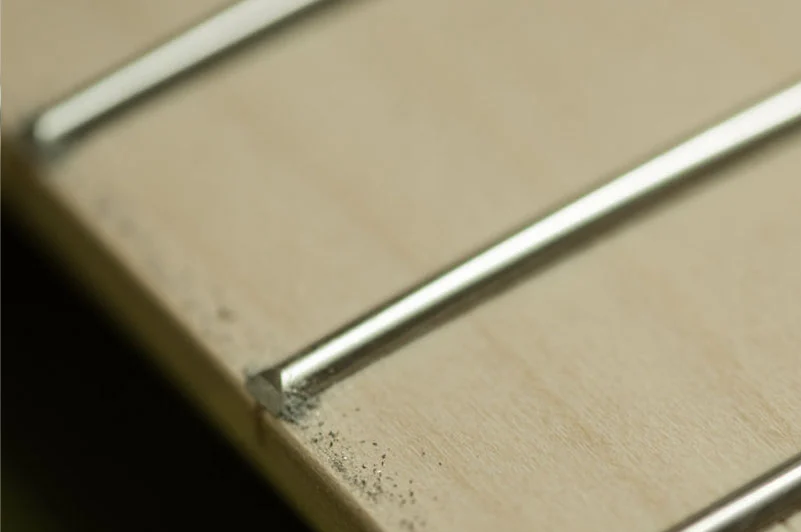
In this guide we will be discussing how to select fretwire for any new build or repair/restoration project. We’ll walk through crown width, crown height, tang width, and material choices so you can spec frets that fit the instrument, the repair, and the player. The right fretwire can change how a guitar bends, intonates, sustains, and feels under the fretting hand, so a little measurement know-how goes a long way.
This article will include fitting the fretwire, not only to the fret slots, but to the player’s particular needs based on their playing style or technical limitations. Fret not: once you know what each dimension does, choosing the right wire gets a whole lot easier.
Fretwire Basics
Parts of the Fretwire
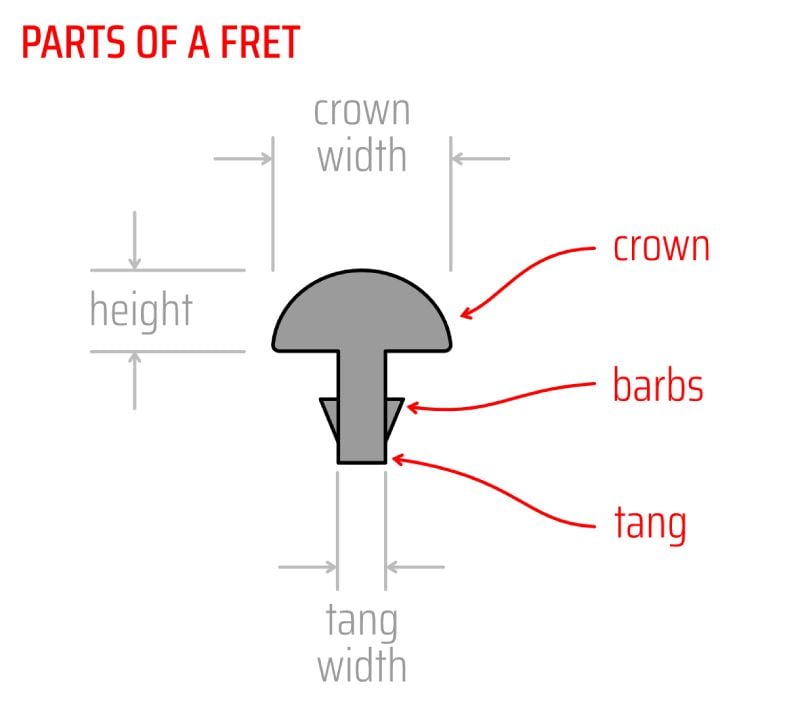
Before comparing sizes, it helps to know the three main parts of the wire you’re measuring and installing.
- Fret Crown - The rounded part of the fret above the surface of the fingerboard
- The Tang - The flat section of fret that attaches the fret to the fingerboard by way of the fret slot
- The Barb - The triangle or diamond shaped protuberance on the tang which provides grip for the tang in the fret slot.
The crown is the part the string contacts. The tang and barbs are what help the fret seat securely in the slot. When all three are matched correctly, the fret can do its job cleanly: hold the string at a precise point, stay seated, and support the feel the player expects.
Common Fretwire Materials
Material affects how the fret wears, how it feels under tools, and, in some cases, how bright or traditional the guitar sounds to the player. Here are the common options we see builders and repair pros weighing at the bench.
Nickel Silver
Nickel Silver is the traditional alloy for fretwire. It is easy to work with for the luthier and, being the historically traditional alloy, its sonic flavoring is all people knew for decades - it just sounds like a guitar. This is the default material.
For most builds and refrets, nickel silver remains the familiar choice. It is approachable to install, easy to dress, and gives players the fret feel they expect from a traditional guitar.
Stainless Steel
Stainless steel is the relatively new kid on the block. Some guitarists have playing styles, or body chemistry that obliterates fretwire. Stainless steel can be an excellent material for them, although most luthiers have a significant upcharge for this material. Stainless steel also sounds brighter and can accentuate fret imperfections with more apparent fret buzz.
Pro tip - Play several guitars fretted with stainless to find out if it’s right for you before making the investment.
It is also tougher on files, cutters, and polishing tools, so the added labor and tool wear are part of why many shops charge more for stainless steel fret jobs.
Gold Alloy
Gold fretwire sits between nickel silver and stainless steel for many players and builders. It gives you another option when you want added durability, easier workability than stainless steel, and a distinctive look without moving all the way to stainless.
Cryowire
Cryowire – Frets that last longer and play better, without extra work.
There have been many advances in fretwire over the last decade, but new materials have been tougher to work with, wear tools faster, or don't have the traditional look you and your customers want. Cryogenic, or deep freezing treatment, has been used in countless industries to make metal parts tougher and more durable. It is now used in this fretwire to produce the same result while maintaining a traditional look.
That makes Cryowire a good fit when you want longer wear while keeping the familiar look and bench feel of traditional fretwire.
Fretwire Measurements: Width, Height, and Tang Width
Fretwire dimensions are small, but they matter. A few thousandths of an inch can change how the guitar feels, how easy it is to bend, and how much pressure the player needs to keep a note clean and in tune.
Crown Width
The width of the fretwire crown is measured at its widest point, just before the crown transitions to the tang.
A wider crown gives the builder more material to shape into a rounded profile, while a narrower crown leaves more room between frets on shorter-scale instruments.
Crown Height
The fret crown height usually has the greatest impact on the feel of the instrument. Uninstalled fret crown height can be measured in thousandths of an inch or millimeters, and is listed as “Crown.” It is measured from the flat area where the crown meets the tang to its highest point in the center top. You can also use the StewMac luthier digital calipers to find this measurement easily with fretwire you have on hand.
Higher crowns lift the player’s fingers farther from the fingerboard. Lower crowns keep the string closer to the board and can feel more traditional or controlled, especially for players with a firmer fretting hand.
Tang Width
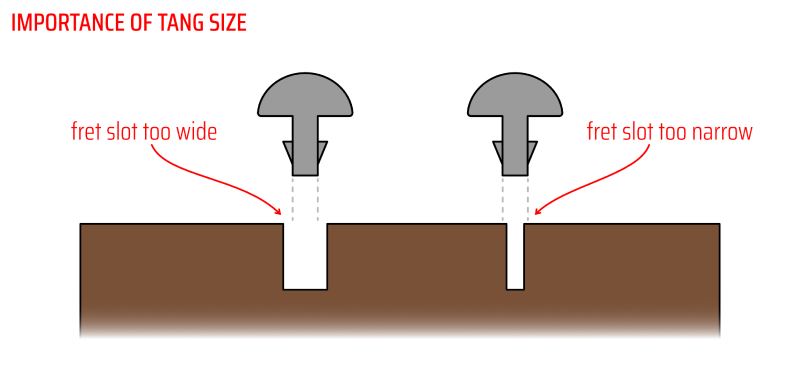
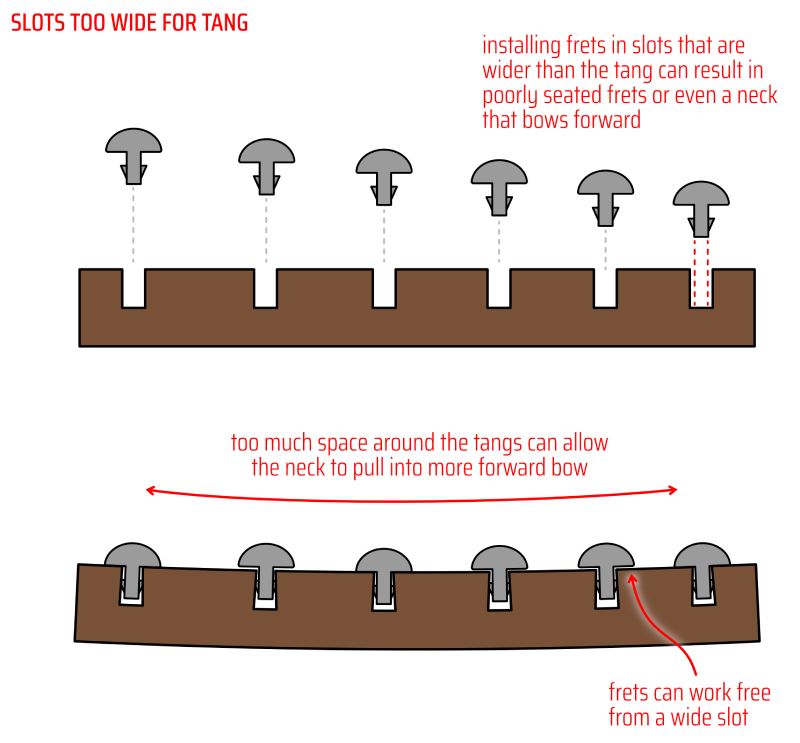
Tang width dimensions are mission critical when fretting or refretting a guitar. Tangs that are too narrow can lead to loose frets that can struggle to maintain their level, produce good tone, or allow too much relief in the neck. Conversely, tangs that are too tight can be resistant to proper seating and potentially back bow a neck from compression.
Tang width is measured as the thickness of the tang, not including the barbs. In practice, it needs to match the fret slot closely enough to hold the fret securely without forcing the neck into compression.
Tang height is also an important factor. A tang that is taller than a fret slot is deep will never seat correctly. A tang that is shorter than a fret slot is deep can lead to a visible gap between the bottom of the tang and the slot. Particular luthiers can spend a significant amount of time filling these gaps. Tapping a frets in and pulling them out due to a poor fit is an erosive process for the fingerboard. A great way to check depth prior to installation is with a tool like the Stewmac Fret Slot Depth Gauge.
For a size-selection guide, the takeaway is simple: crown dimensions shape the player’s feel, while tang dimensions determine how well the fret fits the instrument.
Common Fretwire Profiles and Why Width and Height Vary
Once you understand width and height separately, the next step is looking at how they work together. Most fretwire profiles are a balance of clearance, comfort, durability, intonation control, and playing style.
Taller Fretwire
High Fretwire Advantages
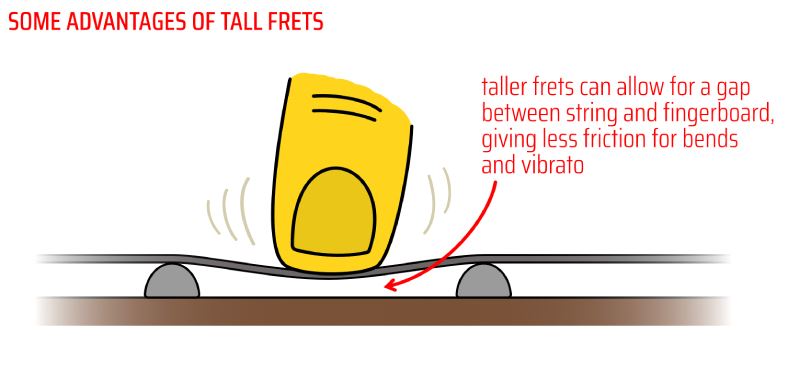
- Fingers are away from the fingerboard leading to less friction when bending notes or applying vibrato.
- Having fingers away from the fingerboard while using a light grip can feel faster for transitions between positions, something similar but not as aggressive as a scalloped fingerboard.
- When frets are worn, divots can be removed with a fret level. Low height frets will need to be replaced sooner.
High Fretwire Disadvantages
- The action feels stiffer. It is natural for most players to judge the action height of the guitar from the fingerboard to the string. Taller frets, with the same action, will make the strings further away from the fingerboard. This is significant for people who play with a tight grip on their fretting hand.
- There can be intonation issues. With the added elevation of the high frets, comes the unfortunate compromise of pulling the string out of tune when pressing down on the string. Without the backstop of the fingerboard, it is possible to press hard enough to significantly raise the pitch of the string.
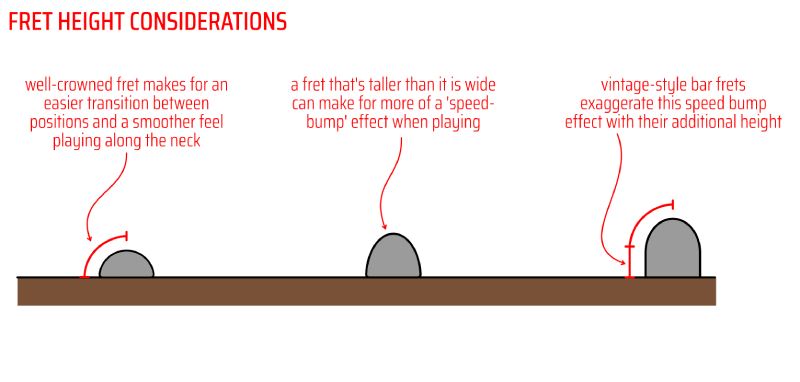
- Tall frets without a properly rounded crown and with tight fretting hand grip can feel like little speed bumps when changing positions up and down the neck.
- The speed bump effect can also be produced with frets that are taller than they are wide. With the round of the crown not meeting the fingerboard, the flat portion of the crown between the fingerboard and the rounded section can feel quite rough when changing positions. Martin Bar frets, used up until 1934, can be an excellent and exaggerated example of this phenomenon.
In other words, taller fretwire can feel fast and bend-friendly, but it rewards a lighter touch. Players with a heavy fretting hand may press notes sharp more easily.
Wider Fretwire
Wide Fretwire Advantages
- There is enough material to produce a very rounded crown. They are therefore very comfortable for quick position changes up and down the neck.
- More support for the playing surface means frets wear less quickly.
- Extra mass can mean extra sustain and less damping.
Wide Fretwire Disadvantages
- Wider frets require more effort to crown. It is not uncommon for some shops to have a wide fret upcharge for level crown and polishes.
- When wide frets get low it can be impossible to get a crown on the fret that terminates in the center of the fret. Low, wide and flat frets can adversely affect intonation, and frets with a flat, uncrowned top can experience extra fret buzz.
Wider fretwire is often paired with more height because the extra material allows for a rounder, smoother-feeling crown. That round profile can reduce the “speed bump” feeling some players notice with tall, narrow wire.
Standard Guitar Fretwire
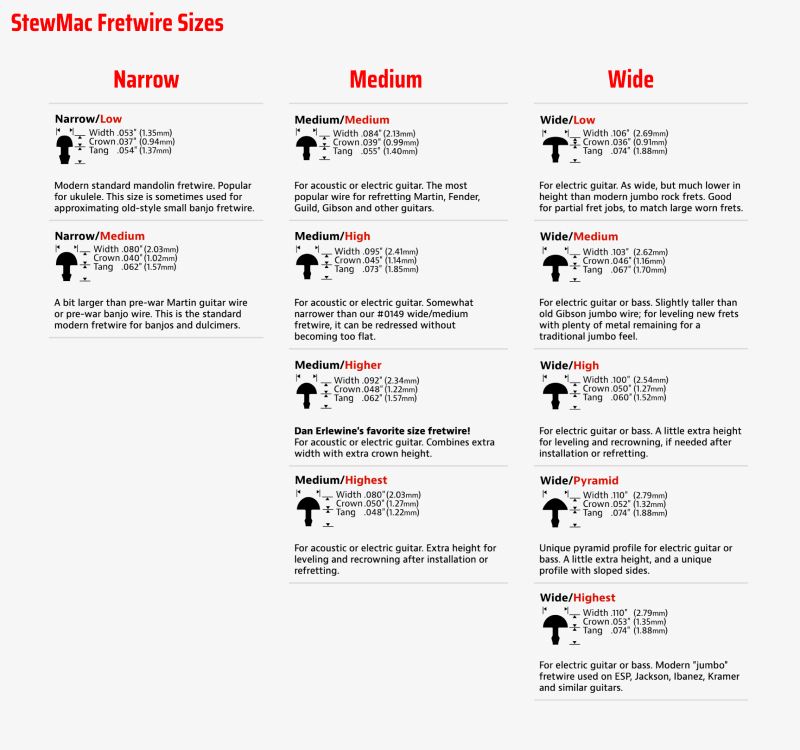
StewMac fretwire is categorized in low/medium/high for height and narrow/medium/wide for width. When selecting fretwire, do not discount medium/medium as a great all around default fretwire. A fret job is a serious investment of time and a radical selection of fret dimensions should only be undertaken with considerable advanced knowledge.
For many acoustic and electric guitars, narrow/medium or medium/medium fretwire is the comfortable middle ground. It gives the player a familiar feel, keeps intonation forgiving, and avoids pushing the guitar too far toward a specialized setup.
Mandolin and Banjo Fretwire
Because mandolins and banjos have less space between notes, narrower and lower fretwire helps preserve room for the player’s fingers. The goal is precision without crowding the fretboard.
Bass Fretwire
Extra wide fretwire is often used for basses to provide extra material to prevent the large strings from prematurely eroding the fretwire.
Bass strings put more mass and pressure against the fret, so a wider, taller profile can help the wire stand up to wear while giving the player a solid contact point.
Low Fretwire
Low Fretwire Advantages
- The action looks much lower. Harkening back to the 50s when playing styles were much different, Gibson produced the “fretless wonder” guitars with ultra-low fretwire. These frets were so low the action looked negligibly higher than the fingerboard itself. The effect was much like that of a stringed instrument without frets, like a violin.
- Intonation is much more forgiving for players with a tight fretting hand.
Low Fretwire Disadvantages
- Vibrato and string bending has the player’s finger in constant contact with the fingerboard. Wear patterns develop in fingerboard with aggressive playing and it is challenging to perform modern repertoire involving string bending.
- When frets are worn a refret is often the only remedy.
Low fretwire can be a good fit for vintage-style playing, controlled fretting pressure, and players who like the feel of very low action. It is less forgiving for modern bending, wide vibrato, and aggressive lead work.
Matching Width and Height to Your Playing Style
Specs are useful, but the best fretwire choice comes down to how the player actually plays. Chord-heavy players, rock players, and shredders often want different things from the same neck.
Narrow/Medium Fretwire
Narrow/medium fretwire is the most common choice for a reason. It feels familiar, it is forgiving with imprecise technique, and it works well on both acoustic and electric guitars.
For chord melody jazz players, acoustic players, and anyone who spends a lot of time on extended chords, a more moderate crown can make it easier to control pressure across each note. Taller frets can be useful, but they also make it easier to pull individual notes sharp if the player grips too hard.
Medium-High, Higher, and Highest Fretwire
Medium-high and higher fretwire are common choices for rock players who want easier bends and solos while keeping the guitar feeling relatively familiar. The player’s fingers ride higher off the board, but the fretwire does not feel as specialized as a very wide, very tall shred-focused profile.
Wide/High and Wide/Highest Fretwire
Wide fretwire is often used in combination with tall fretwire to facilitate a rounder crown.
Wide/high and wide/highest fretwire are common for players who prioritize fast position changes, big bends, and lead work. For shredders or players whose chord work leans heavily on power chords, the tradeoffs of extra height are often less noticeable than the added speed and clearance.
The more complex the chord voicing, the more important touch control becomes. The more the player values bends, vibrato, and quick shifts, the more useful extra height and width can become.
A Note on Tang and Slot Fit
Tang fit still matters, especially for repair pros and builders doing the installation. It just should not outweigh the size-selection conversation for the player.
Unfortunately, fret tang dimensions are not infinitely variable. For instance, StewMac’s fret width is listed as being sized to fit a .023” slot. In general the vast majority of fret jobs will either require some modification of the slot, the tang, or both to get things just right.
- The Fret Barber is a great tool for reducing the width of the tang. It should be noted that the barbs are lost when using this tool. Some form of extra effort will need to be made to make sure the frets remain in the slots.
- The Fret Crimper is also available for adding some width to fretwire. Guitars that have experienced many refrets over their lifetime can have severely eroded fret slots. A judiciously applied crimp to the tang can be just the thing to avoid a new fingerboard or other more extreme remedies.
- The Fret Tang Reducer will to shave off some tang HEIGHT, used when the fret slot is too shallow (often on vintage fretboards).
- Fret slot saws and cleaning tools are a must. If you are using StewMac fretwire and the slot is too tight or too shallow, you can use any of their fret slot modification tools to fit the slot to the tang rather than fit the tang to the slot (much less physical effort and time).
- With a precision router base, your Dremel, and the correct cutting bit, short work can be made of slots that are either too tight or too shallow. This is also a great method when fretting a bound fingerboard where slot cleanup next to the binding can be extra tricky and time consuming.
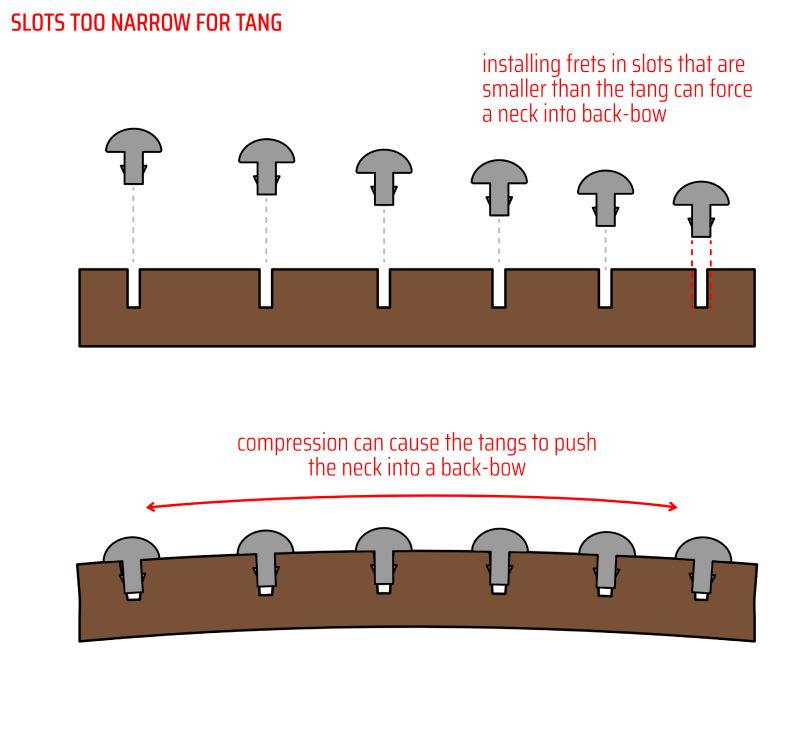
For readers choosing fretwire, this section should function as a pro-level reminder: size is not only about crown feel. The tang still needs to fit the slot cleanly for the fret job to hold up.
StewMac Fretwire—Precision Sizes for Every Player
At StewMac, we carry fretwire for players, builders, and repair pros who care about getting the details right. Whether you are after a traditional nickel silver refret, a longer-wearing material, a vintage-style low crown, or taller wire built for fast bends and clean lead work, choosing the right size starts with understanding how the crown, tang, and material work together.
We’ve spent decades helping guitar people solve guitar problems at the bench, and fretwire is one of those small parts that can make a big difference. Choose the profile that fits the instrument, the player, and the job in front of you, and you’ll be in a much better position to build or repair a neck that feels right from the first note.


