Bolt-On Necks
Whether you’re building a new parts guitar or upgrading a favorite workhorse, the neck joint is where playability, tone, and long-term stability all meet. In this guide, we’ll break down how bolt-on guitar necks compare to set necks, walk through the real-world pros and cons of bolt-on construction, and show you how to install, align, and drill your neck mounting holes with confidence—using the same practical steps and shop-tested tips we rely on every day at StewMac.
Bolt-On vs. Set Guitar Necks
When you are choosing or building a guitar, the neck joint does a lot more than hold things together—it changes how the instrument feels to work on and how it responds in your hands.
- Bolt-on necks are attached with screws or bolts, leaving a small mechanical gap between neck and body. That joint tends to emphasize a snappier, brighter, more “twangy” attack with slightly less natural sustain. They are generally easier and more affordable to manufacture, simpler to repair or replace, and give you the option to tweak neck angle with shims—all reasons they’re a staple on many classic bolt-on designs.
- Set necks are glued into a tight, seamless pocket, which helps transfer energy more smoothly between neck and body. Players often describe the result as warmer, fuller, and more sustained—great for singing leads and thick chord work. The tradeoff is serviceability: resets, repairs, and neck replacements are more involved, and you don’t get the same quick adjustability that a bolt-on joint offers.
In practice, both styles can sound and play fantastic when they’re built well. Instead of chasing a “better” joint on paper, focus on how the guitar feels under your fingers, how it responds through your rig, and whether you want the long-term serviceability of a bolt-on or the more integrated feel of a set neck.
Pros and Cons of Bolt-On Necks
Bolt-on necks are a proven design that show up on countless workhorse guitars, but like any construction style, they come with tradeoffs that are worth understanding before you commit.
Pros of Bolt-On Necks
Easier Repair and Replacement
One of the biggest wins for bolt-on necks is serviceability. If the neck twists, cracks, or just is not your favorite profile anymore, you can unbolt it and swap in a new one without turning the whole guitar into a wall hanger. For working players and techs, that means faster turnaround, lower repair costs, and the freedom to experiment with different necks without buying a whole new instrument.
Adjustable Neck Angle and Player-Friendly Maintenance
Bolt-on designs make it much easier to fine tune how a guitar plays. By adding or removing a shim in the neck pocket, you can change the neck angle to dial in action, bridge height, and overall feel. Being able to pull the neck off the body also makes fretwork, refinishing, and deep cleanups less of a wrestling match. Even small issues like slightly loose screw holes can usually be stabilized with simple fixes, instead of major surgery.
More Affordable to Build and Buy
From a manufacturing perspective, bolt-on guitars are faster and more economical to produce. Bodies and necks can be built separately and joined in minutes, instead of spending time fitting and clamping a glued joint. That efficiency shows up in the final price tag, which is a big reason so many classic “working player” instruments use bolt-on construction. You are getting a proven design without paying a premium for the joint itself.
Snappy, Articulate Tone
Bolt-on necks are famous for their attack and clarity. The mechanical joint and small gap at the pocket tend to emphasize what players describe as snap, pop, and twang. Notes jump out quickly, chords stay articulate, and even neck pickup tones keep a bit of that percussive edge. If you play styles where definition and pick attack matter more than long, blooming sustain, a good bolt-on can feel like home.
Real-World Durability
A well built bolt-on neck, especially in a stable wood like maple, holds up extremely well to the abuse of real life. The joint allows a little movement that can help absorb shock if the guitar gets knocked over or bounced around in transit. Instead of a glued joint failing dramatically, the bolts and pocket often ride out the impact. For gigging players who are constantly loading in and out, that resilience is a real advantage.
Cons of Bolt-On Necks
Potentially Reduced Sustain and Resonance
Many builders and players feel that bolt-on guitars do not quite match the continuous resonance of a good set-neck or neck-through design. The same mechanical joint that gives you that fast attack can act as a small barrier to energy transfer between the neck and body. Through an amp, the difference is often subtle and easy to tame with pickups, gain, and effects, but if you are chasing maximum natural sustain and warmth, this is something to keep in mind.
Bulkier Heel and Upper Fret Access
Traditional bolt-on designs require a thicker heel and enough material around the joint to hold the screws and plate. That extra bulk at the neck joint can make it harder to comfortably reach the highest frets, especially on older or more vintage-style instruments. Modern contoured heels and “all access” joints have improved this a lot, but if you live above the 15th fret, heel shape is a detail worth paying attention to.
Stigma of Being “Cheaper”
Because bolt-on construction is less expensive to produce, it has picked up an unfair reputation in some circles as the “budget” option. There are plenty of high end bolt-on instruments that play and sound phenomenal, but the perception still lingers that glued necks are automatically more “serious” or “pro.” That bias can influence resale value and how some players respond to a guitar before they ever plug it in.
Sensitive to Build Quality and Fit
Most of the real problems with bolt-on necks come from poor execution, not the concept itself. If the neck pocket is sloppy, the screw holes are stripped, or the joint is misaligned, you will hear it and feel it: buzzing, instability, dead spots, or weak tone. A tight, well fitted neck pocket with solid hardware is critical. When the joint is done right, most of those horror stories about bolt-ons disappear quickly, but it is an area where build quality really shows.
How to Install and Set Up a Bolt-On Neck
Attaching the neck
Place the neck into the neck-pocket and check its fit. Ideally it should drop in, or be a little snug—you shouldn't have to force the neck into the pocket. If the body is unfinished and you are pre-assembling the instrument (highly recommended!), remember that the finish will make the neck pocket smaller—it will build up on the edge of the rout. Be sure to compensate for the finish buildup or the neck will be too tight after finishing.
Centering and Aligning the Neck
Next, locate and center the neck in the neck pocket/body. (Use a small clamp with thin wooden shims on the clamping surfaces to hold the neck in place during this process.) To double-check if the neck is centered on the body, take a long straightedge and place it along the edge of the neck. Be sure that a portion of the straightedge is over the body at the bridge's location. Compare the two sides of the neck, and where the straightedge hangs over the bridge (i.e. the straightedge may be even with the outside of the E-string saddles, the outer saddle height screws, the outer edges of the bridge plate, etc.).
Drilling the Neck Bolt Holes
Drilling the neck bolt holes is one of the most critical operations in the construction of a bolt-on neck guitar. The holes must be properly sized and located so that the neck is secure in the pocket, insuring that the vibrations and resonance of the instrument are not compromised.
Tips on Locating and Drilling Neck Mounting Holes
Notes on Pre-Finished Necks
The two or three holes in the heel of our pre-finished necks are for manufacturing as well as holding the neck during the finishing process. They will not interfere with mounting holes or neck screws.
Marking Neck Bolt Locations on a Pre-Drilled Body
If the body already has the neck holes, place the neck into the pocket (properly located and aligned with the bridge), and center punch or mark the locations to be drilled onto the neck. Insert the four neck bolts into their holes, and tap them with a hammer to mark their locations on the neck.
Using the Neck Plate to Locate Undrilled Body Holes
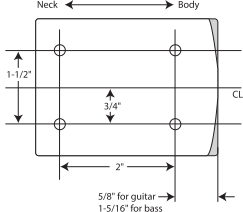
If the body doesn't have the neck bolt holes drilled, use the neck plate to help locate them. The simplest way is to place the neck plate into the pocket and properly position it in the rout (refer to the drawing for the proper location). The measurement "A" is 5/8" for guitar, 1-5/16" for bass.
Drilling Neck Bolt Holes in the Body
After locating the plate, centerpunch your marks and drill the holes. Most body/neck mounting holes are 3/16" diameter, and they are slightly counter sunk on the backside of the body. We recommend using a drill press to maintain squareness and proper alignment.
Preparing to Drill Neck Holes
Next, you must drill the holes into the neck. After center punching the neck bolt locations, determine the proper size drill bit (most neck bolts use a 1/8" diameter bit) and chuck it into your drill. Place a neck bolt through the neck plate and body. Measure the amount of the neck bolt that extends up into the neck pocket, and mark your drill bit (a piece of masking tape around the bit works great) so that it will drill into the neck to that depth.
Drilling the Neck Mounting Holes
Carefully drill the holes in the neck. Pull the bit out a few times while drilling each hole to clear the shavings packed onto the bit—when drilling maple or other dense hardwoods, drill the hole in gradual steps so the bit won't get too hot or clogged.
Build Your Next Bolt-On with StewMac Kits and Tools
If you’re ready to put all this bolt-on neck know-how to work, we’ve got everything you need on the bench. Our acoustic guitar kits and electric guitar kits with bolt-on necks let you focus on fit, setup, and tone, not rough lumber and guesswork. Pair them with our bolt-on neck builder tool sets and shop-tested hardware, and you’ve got a complete path from loose parts to a dialed-in, stage-ready guitar—all backed by the same tech support and how-to resources we use in our own shops every day.